A Winter Evening, Room by Room
A winter evening room-by-room routine helps you match lighting to each activity, keep routes clear and make comfortable choices without rigid rules.
A winter evening room-by-room routine works best when each space is set up for the activity happening there. Start with the lamp, task or comfort adjustment that helps now, then adapt when people move or plans change.
Think of the evening as a sequence of useful places, not a round of switches to turn off. A kitchen may need clear light for washing up, while a reading chair needs a lamp aimed at the page. Keep safe movement and different household needs in view throughout.
How should I start a winter evening room-by-room routine?
Begin with the next activity, not a fixed schedule. Ask who will use the space and what they need to see or do. That keeps lighting choices practical and avoids setting up rooms before anyone needs them.
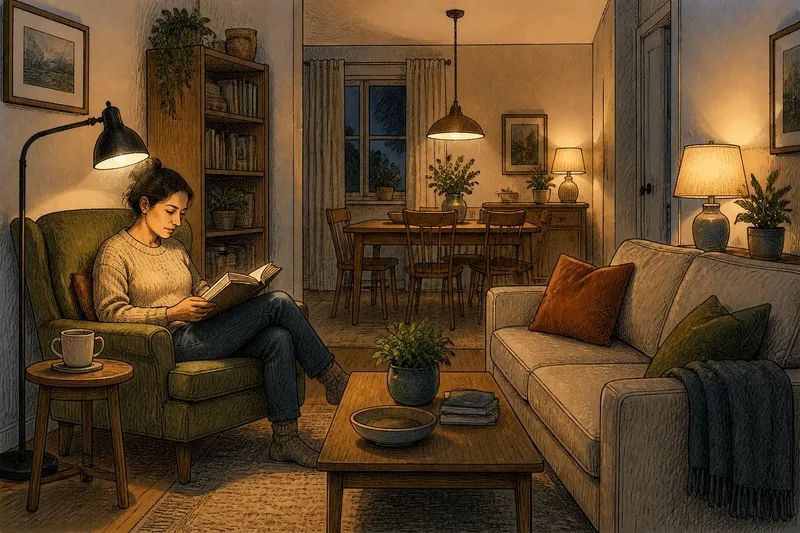
Say you have finished supper and plan to read in the living room. Leave enough kitchen light to put food away safely, then use a nearby lamp to illuminate your book. Once the kitchen task is done, switch off only the light that no longer helps; the result is a clear work area and a comfortable place to read.
Use transitions you already make, such as clearing the table or getting ready for bed, as prompts to adjust a room.
Which lighting suits common evening activities?
Choose light for the task. Reading calls for light on the page, food preparation calls for clear visibility on the work surface, and moving between rooms calls for a safe route. A ceiling fitting can light a broader area; a table or floor lamp can direct light towards a seat.
If a page sits in shadow, reposition the lamp. If a practical task feels difficult to see, use more of the available room lighting rather than persisting with a dim setting. A softer setting may suit conversation or watching television, but it may not suit sewing, sorting paperwork or helping with homework.
Keep controls within reach and cables out of walking routes. For questions about bulb compatibility or fitting a light, follow the manufacturer’s instructions and ask a qualified electrician where needed.
What should I check in each room?
Use this short check at natural transitions. Each observation points to a decision, with a safer or more useful alternative where needed.
- Kitchen: Check whether food preparation or washing up is still under way; if it is, keep clear task lighting, but if the work is finished, switch off lighting that serves no remaining purpose.
- Living room: Check whether someone is reading, chatting or watching television; if a reader needs clearer light, angle a lamp towards the book, but if the room is being used for quiet conversation, choose a comfortable softer arrangement.
- Hallway and stairs: Check whether anyone needs to pass through; if someone is moving, keep the route adequately lit, but if the route is clear and no one needs the light, turn it off or leave it for the next person to decide when passing.
- Bathroom: Check whether someone is using the room or about to enter; if so, leave the light available, but if it is empty and no one is heading there, switch it off when convenient.
- Bedroom: Check whether someone is changing, reading or settling down; if they are, provide suitable light, but if the room is not yet in use, wait rather than preparing it out of habit.
- Shared work surface: Check whether someone is still using it; if papers or food are being handled, keep the area visible, but if the task is finished, clear the surface or leave it ready for the next person according to your household’s routine.
These checks are prompts, not a required inspection route. Let the people using the home decide what helps them.
How can I make a room feel comfortable without changing every setting?
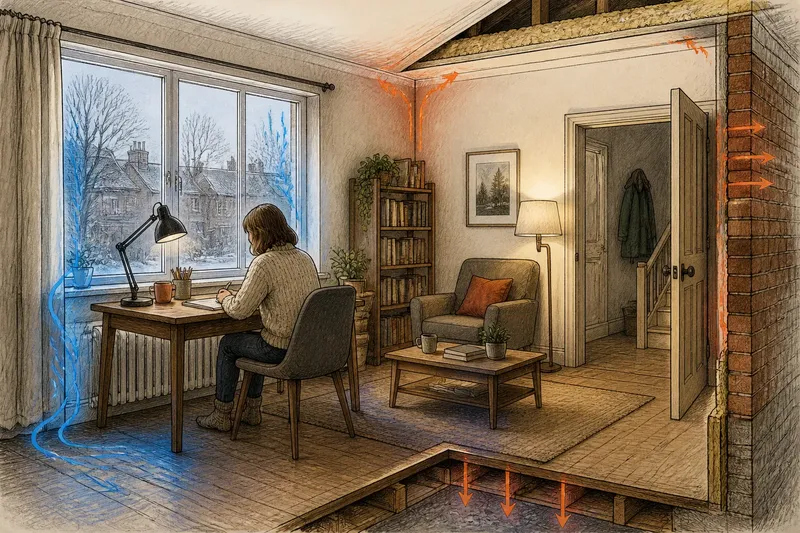
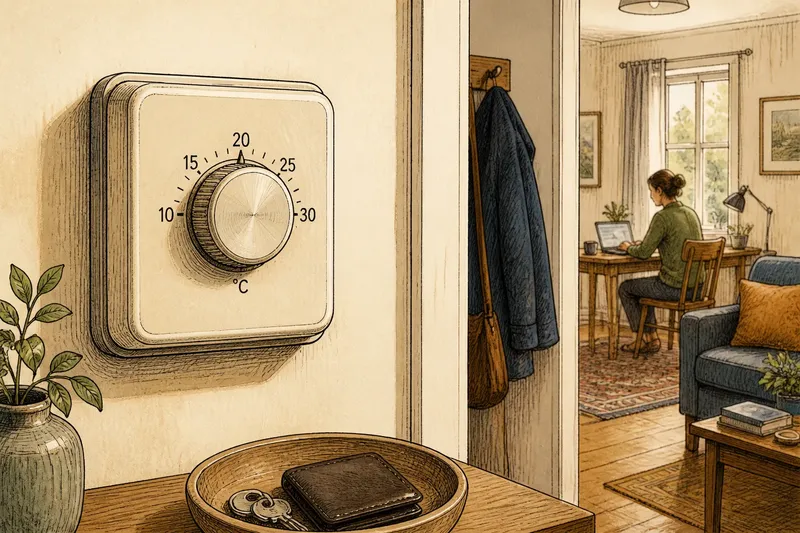
Notice the source of discomfort before adjusting heating controls. A draught near a chair, a cold drink left within reach, or a task that keeps someone sitting still may call for a different response than a room that is generally too cold.
Try a warm layer, a blanket or a seat away from a draught if those suit the person and the activity. These are ordinary comfort choices, not substitutes for using the heating system as intended. If a room remains uncomfortable or the controls are unclear, check the system instructions or consult a qualified heating professional. Seek appropriate health advice if cold is affecting someone’s wellbeing.
Make a small adjustment that addresses the actual discomfort, then check whether it helped.
What if people in the home want different things?
Ask what each person needs rather than relying on silent rules. A reading lamp can serve one seat while the rest of the room stays less bright. A light needed for safe movement should not be switched off without checking who relies on it.
Agree on simple signals that suit your household, such as leaving a lamp beside a reading chair while someone is using it. Keep routes clear for children, visitors and anyone with sight or mobility needs. If a shared space has competing uses, offer separate areas or adjust the light to support the task that needs clearer visibility.
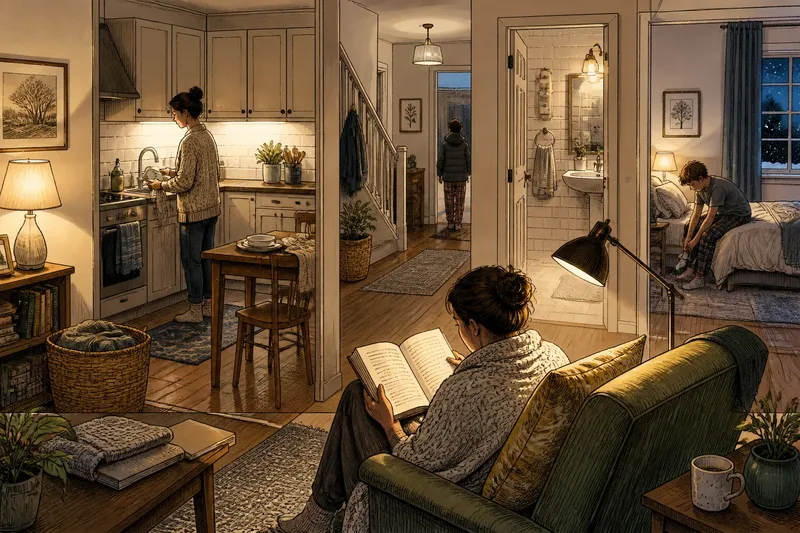
For example, imagine one person is preparing lunch in the kitchen while another is getting ready for bed. Keep the kitchen work surface clearly lit, and let the bedroom user choose lighting that helps them change safely. When the kitchen task ends, switch off its task light if nobody else needs it; the decision protects visibility during each activity without imposing one routine on both people.
What questions come up during an evening routine?
Should I turn off a light as soon as a room is empty?
Check whether someone needs the light for a nearby route or is about to return to the task. If neither applies, switch off lighting that no longer serves a purpose; if someone needs it, leave it on until that need has passed.
Should every room have the same level of light?
No. Match the light to the activity and the person using the room. Use clearer light for detailed tasks and a more comfortable arrangement for quieter activities, while keeping movement routes safe.
What should I do if plans change?
Adjust the room you are entering rather than restarting a full house routine. If conversation moves to the kitchen, provide light for that activity and decide later whether the previous room still needs its lighting.
Is it useful to leave a lamp on as a household signal?
It can be, if everyone understands what it means and it does not leave a route unsafe or confuse other household members. Agree on a simple signal, and change it when the person or activity changes.
How can I keep the routine flexible?
There is no need to correct every missed switch or follow the same sequence each evening. If you notice a light while passing, check whether it is still useful. If the evening changes, respond to the activity in front of you.
A winter evening room-by-room routine is a practical way to match lighting and comfort to people’s real activities. Keep the useful light, adjust what is not helping, and leave a clear route for whoever moves next.