One Bright Ceiling Light or Several Lamps?
One bright ceiling light or several lamps? Match light to the task and room to make evenings more comfortable and avoid lighting spaces you do not use.
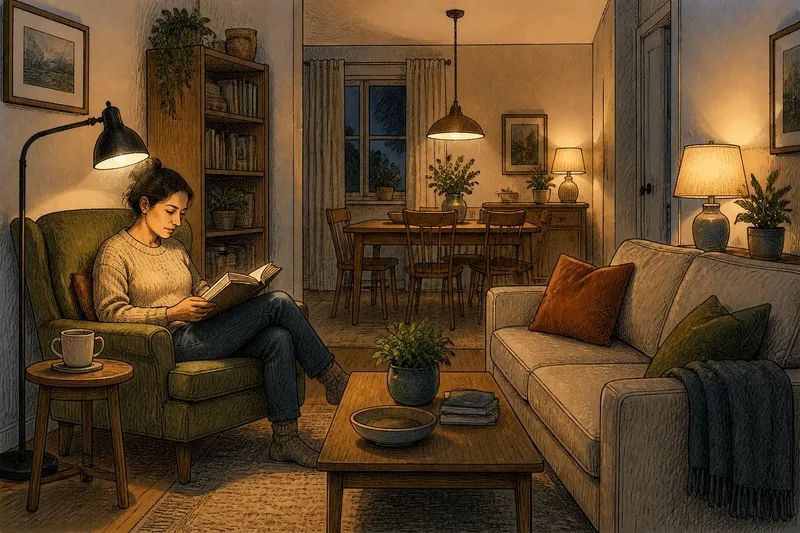
One bright ceiling light or several lamps can make the same room feel very different, because light is useful only where you need it. A ceiling fitting spreads light across the room; lamps let you direct it towards a book, a worktop or a chair. The better arrangement depends on what happens in the room and which controls are easiest to reach.
Where does the room need light?
Start with the room’s regular activities, not the number of sockets. A dining table, sofa, desk and reading chair each call for light in a different place. A single central fitting may brighten the floor and walls while leaving a person’s book or keyboard in shadow.
Walk through the room after dark and notice where you actually look, read, eat or work. Check whether a pendant hangs over the table, whether shelves cast shadows, and whether the ceiling fitting is awkwardly placed relative to the furniture. These observations are more useful than aiming for uniform brightness everywhere.
A ceiling light is practical for moving around, tidying and finding things. A lamp beside a chair can support reading without lighting the whole room as strongly. In a room used for several activities, a mixture can provide broad background light and a more focused pool where needed.
Check the lamp’s shade and position as well as its bulb: a deep shade can keep light out of your eyes, while a clear bulb exposed at eye level can feel harsh.
How do controls change the choice?
One ceiling switch is simple, but it usually gives you one choice: on or off. Several lamps can be switched separately, so you can light the sofa without lighting an unused desk. That flexibility is useful only if the switches are convenient and everyone in the household knows which one serves which area.
Think about the route into the room. If you enter in darkness, a reachable ceiling switch may be the easiest first light. If lamps have separate switches scattered behind furniture, turning them on and off can become a nuisance. Put a lamp where its switch can be reached from the seat, and keep its cable clear of walking paths.
Say you use a living room for reading on the sofa and little else in the evening. A floor lamp beside the sofa, switched from the seat, could provide the light for that activity while the ceiling light stays off. The expected observable result is a lit reading area with the rest of the room less brightly lit; if the room feels gloomy when you stand up, retain an easy-to-reach general light as well.
What will the light feel like?
A central ceiling fitting often creates an even, practical feel, but light coming from above can make faces and corners look stark. Lamps at different heights can soften the room’s appearance and make a seating area feel more settled. On the other hand, several bright lamps may create glare or competing pools of light if they point towards your eyes.
Use the shade to control direction. A fabric or opaque shade can reduce direct glare, while a reflective interior can send light upwards or downwards. Place a reading lamp slightly to the side of your usual position so your hand does not cast a shadow across the page. For a desk, position the light to avoid reflections on the screen.
Bulb colour affects the room’s character, too. Warm-toned light often feels gentler in a sitting room; a more neutral tone may suit detailed tasks. The printed information on the bulb and fitting can help you compare colour and suitability before choosing.
Which arrangement suits common activities?
- Reading: Use a nearby lamp aimed at the page, with enough general light to move around comfortably.
- Eating: A pendant or ceiling fitting over the table can light faces and food; a dimmer or separate lamp may help when the table is not in use.
- Working: Combine a desk lamp with room light if the contrast between the screen and its surroundings feels tiring.
- Cleaning: A broad ceiling light makes it easier to spot dust and misplaced objects across the room.
- Relaxing: One or two shaded lamps can create a calmer pool of light, provided the route through the room remains visible.
These are starting points, not fixed rules. A small room with pale walls may feel bright with one lamp, while a larger room with dark surfaces may need several sources for comfortable use.
What questions help you decide?
Are several lamps always more energy efficient?
No. The result depends on the lamps, their bulbs and how long each is on. Separate controls can help you light only the area in use, but multiple lamps left on together may draw more power than a single suitable fitting.
Can a ceiling light work for reading?
It can, if the fitting gives enough light at the page without glare or a strong shadow. If the light comes from behind you or leaves the book dim, a nearby task lamp may be more comfortable.
Should I replace the ceiling light with lamps?
Not necessarily. Keep a convenient general light if you use the room for moving about, cleaning or finding things, then add lamps for seated activities that need more directed light. A combination often serves more situations than either arrangement alone.
How do I compare bulbs for different fittings?
Check the fitting’s permitted bulb type and the bulb’s brightness, colour and energy information. Follow the label and manufacturer’s instructions, especially where a shade or enclosed fitting affects which bulb is suitable.
What is a simple way to try a different layout?
Before buying anything, use the lights you already own to test where a lamp would help. Move a table lamp to the reading chair, or borrow a suitable floor lamp from another room for an evening. Notice whether the page is clear, whether the switch is reachable and whether you can cross the room without switching on extra lights.
If you decide to add a lamp, choose its position before choosing its style. Check socket access, cable routing, shade direction and whether the fitting leaves a clear path. For a table lamp, make sure the table is stable and the base does not crowd the surface; for a floor lamp, keep it clear of doors and regular walkways.
One bright ceiling light or several lamps is not an all-or-nothing choice. Keep the ceiling fitting for broad visibility, then use a separately controlled lamp where a regular task needs a closer pool of light. That small distinction can make the room easier to use without lighting every corner by default.